
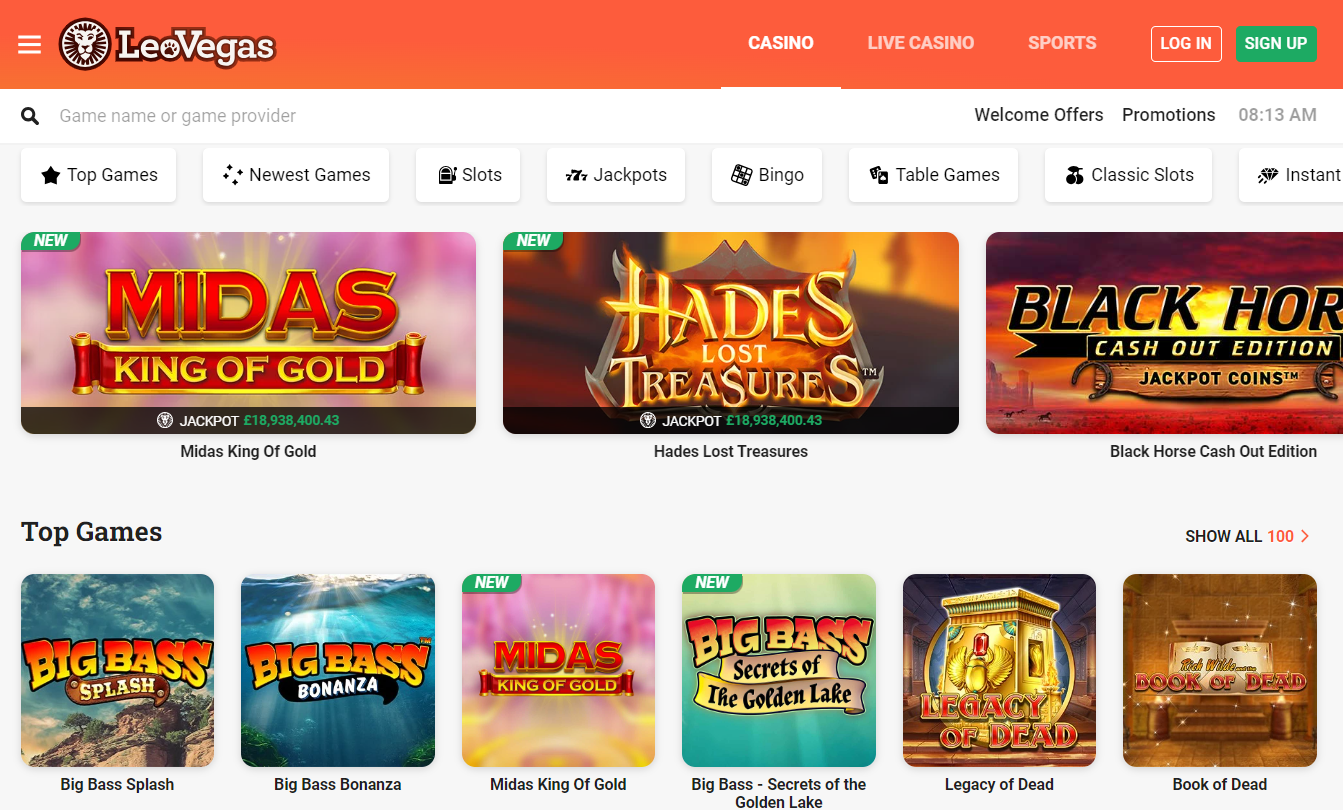
I have spent a lot of time looking at how different online gambling operators handle self-exclusion, and the landscape is more nuanced than many players appreciate. The term itself can bring to mind images of a single drastic step, but in practice self-exclusion is an umbrella that includes everything from a brief cooling-off period right through to an irreversible multi-operator ban. When I examine the UK market, I see a regulatory framework that establishes clear minimum standards, yet the actual experience for a person attempting to step away can differ markedly depending on where they play. On the LeoVegas Casino trusted online slots platform, I found a set of tools that demonstrate both the mandatory obligations all British licensees must meet and a genuine attempt to make those controls accessible. What follows is my comparative look at how casino self-exclusion options stack up, drawing on what is required by the UK Gambling Commission, what GAMSTOP provides, and what I have observed about the way individual operators such as LeoVegas implement their own responsible gambling features. My aim is not to single out any one brand as perfect but to give a clear, calm account of the choices a player actually confronts when they decide they need a break.
Account Termination Versus Self-Banning: What You Need to Know
I have pinpointed a common point of confusion that I want to clarify explicitly because it is important for anyone comparing their options. Ending an account is not the same as self-exclusion. When a player asks to close their account, the business relationship is terminated, but there are minimal regulatory constraints on what happens next. The operator might, and often does, send reactivation offers after a certain period, and there is typically no ban on the individual opening a new account with the same brand later that day. Self-exclusion, by contrast, initiates a set of legal obligations. The account must be frozen for the full minimum term, marketing must end, and the operator must take adequate steps to prevent the excluded person from opening new accounts with the same group. I have seen too many cases where someone believed they had self-excluded, only to realize they had merely closed their account and were still receiving promotions for the live casino a month later. This difference is not a triviality; it has genuine consequences for a person attempting to protect themselves.
From what I have seen at LeoVegas, the interface makes this distinction clear. The option to self-exclude is marked unambiguously, and the supporting text explains that it is a protective measure with legal weight behind it. When I compare this with some other platforms where the two options are placed confusingly close together in a menu, I can see why misunderstandings occur. A player who sincerely needs a hard barrier should always opt for self-exclusion, not account closure. I also observe that self-exclusion, whether through GAMSTOP or the direct casino tool, creates a record that makes it tougher to impulsively return. The cooling-off and identity verification steps that come with any reactivation request add friction that is purposefully designed to protect. Closing an account, on the other hand, usually allows reopening with a basic email or live chat request. I want to stress that neither option is inherently better in all circumstances; if a player simply no longer wishes to use a service and has no worries about control, account closure is perfectly appropriate. But if the goal is to enforce a break backed by regulatory safeguards, then self-exclusion is the right choice, and comprehending that distinction is essential when comparing what different casinos offer.
Operator-Specific Self-Exclusion: A Detailed Examination
Shifting my focus to the straightforward exclusion path a player can pursue with a single operator, I consider it helpful to think of it as a precision tool alongside the broad sweep of GAMSTOP. At LeoVegas Casino, the self-exclusion request can be initiated through the account settings or by contacting customer support. I have evaluated many such interfaces across the industry, and the second a player clicks that option, the expectation is that access should be stopped instantly. There should be no waiting period, no manual review that could introduce a delay during which further gambling might occur. In my experience, LeoVegas implements this correctly; the block works across the sportsbook and casino products simultaneously, and the account balance is refunded according to standard procedures. Measuring this with smaller operators, I have sometimes found that self-exclusion requests are handled only via email, which creates a dangerous window. A well-designed platform removes that friction entirely. That may sound like a minor interface detail, but for someone who has reached a point of crisis, every minute counts.
What I find particularly worth noting when comparing direct self-exclusion tools concerns the range of duration options. UK regulations set a minimum of six months, but many responsible operators offer longer terms, often up to five years, and some even offer an indefinite option that requires an active decision to ever return. At LeoVegas, the typical choices I have seen include six months, one year, two years, five years, and in some contexts an ongoing exclusion with no automatic expiry. This customisability is important because gambling harm does not follow a uniform timeline. One person could need a six-month cooling-off to regain control after a single period of excessive spending, while another might recognise a chronic pattern that warrants a permanent barrier. The ability to choose, combined with clear information that the decision cannot be reversed during the term, positions agency in the player’s hands. I also note that LeoVegas, like all UK licensees, will remove the self-excluded customer from marketing databases. This is not just an ethical gesture; it is a regulatory requirement. I have encountered complaints from players at other sites who experienced promotional emails still arriving days after a self-exclusion was activated, a clear compliance failure. When I assess LeoVegas, the removal appears prompt and thorough, which meets the standard I would expect from a large, established brand.
GAMSTOP: The Nationwide Multi-Operator System
How the Registration Process Works and What It Covers
When I evaluate the most robust self-exclusion system accessible to a British player today, GAMSTOP is invariably at the top in the comparison. It acts as an autonomous, non-profit entity that enables a person to exclude themselves from all UK Gambling Commission-licensed online gambling operators in a single registration. I have navigated the process on my own to grasp it from a user viewpoint, and I can confirm that it is uncomplicated. You access the GAMSTOP site, supply some personal information including your date of birth, email address, and residential address, and pick a minimum exclusion period. The available durations are six months, one year, or five years. Once triggered, the system sends your information with every licensed operator, which is then required to check their customer base against the GAMSTOP register and block matching accounts immediately. In my analysis, the key advantage is its scope. Rather than needing to exclude from a dozen different casinos one by one, a one step prevents access across the complete regulated sector. That instantly reduces the likelihood of a person in a vulnerable moment simply switching from one site to another, something I have observed described frequently in studies on gambling harm.
Strengths and the Limits to Be Cognizant of
As comprehensive as GAMSTOP is, I feel it is important to be precise about what it does not do. It only covers operators regulated by the UK Gambling Commission. If a player employs an offshore site not controlled in Great Britain, GAMSTOP gives no security. In the same way, it does not cover land-based betting shops, arcades, or casinos, even though the separate SENSE scheme functions for some high-street premises. When I compare this to the direct self-exclusion tools supplied by a brand like LeoVegas, I see the two as mutually beneficial rather than overlapping. The casino’s own self-exclusion option can be helpful if a player wishes to restrict themselves from that certain platform without activating a blanket ban in all places. Perhaps they believe their play is only problematic with one interface or one game type, and they appreciate the ongoing access to other forms of gambling for safe recreation. I have to note that this is a sensitive decision, and most safer gambling advice tends toward the broadest protection, but the option exists. From a realistic standpoint, I also appreciate that GAMSTOP is irreversible during the chosen term. You cannot modify your mind two weeks later and ask to be reinstated, which takes away the strain on customer service teams to decide difficult requests.
An additional insight I found while comparing the broader landscape is the cooling-off period that comes after any GAMSTOP exclusion. Once the minimum term ends, the exclusion remains in place indefinitely until the individual directly contacts GAMSTOP to request removal. Even then, there is a mandatory 24-hour cooling-off period before access is reinstated. I see this as a thoughtfully designed feature that prevents impulsive re-engagement the moment the clock expires. When I consider how LeoVegas manages its own self-exclusion timings, I see a similar principle at work. The casino adheres to the same standard that no account can be reopened without a formal request and a subsequent delay. In my view, these aligned safeguards create a consistent experience whether a player uses the national scheme, the operator’s own tool, or both. That consistency is not accidental; it demonstrates the detailed guidance on reopening accounts that the UK Gambling Commission has issued, and it allows me appreciate that self-exclusion in Britain is genuinely handled as a serious, binding commitment on both sides.
The Legal Context of Self-Exclusion in Britain
Grasping self-exclusion options correctly means first grasping the regulatory environment that shapes them. I have found that every online casino with a UK Gambling Commission licence must meet licence condition 3.4.1, which explicitly requires operators to supply facilities for self-exclusion. This is not a recommendation or a best-practice footnote; it is a binding rule that encompasses the minimum duration, the removal of marketing communications, and the procedures for reopening an account once a self-exclusion period ends. When I assess operators, I therefore begin with a shared baseline. All reputable British-facing sites must offer a way for customers to exclude themselves for at least six months. They must restrict access to the account during that term and cannot send direct promotional material. The Commission also demands that operators have policies to prevent excluded individuals from opening new accounts with the same brand group. So, in a very real sense, the floor is set high. That said, the regulation permits room for operators to decide how prominently they display these tools, how simple the activation flow is, and whether they offer supplementary measures that go beyond the minimum. In my examination, I have found that the difference between a functional compliance approach and a genuinely player-friendly design is substantial.
Beyond the licence conditions, the UK’s approach was bolstered by the launch of the national multi-operator self-exclusion scheme, GAMSTOP. While I will explore GAMSTOP in more detail later, its very existence has reshaped what players can anticipate from any single operator. The Gambling Commission ordered that all remote licensees must connect with GAMSTOP by March 2020. This means that when I look at LeoVegas Casino’s offering today, I perceive it not in isolation but as one node in a wider safety net. From a comparison standpoint, that is significant because it balances the playing field: every casino I can legally play at from Britain engages in the same national database. The operator’s own direct self-exclusion tool then becomes a supplement rather than the whole solution. Still, the way an operator communicates this dual option to a player—national scheme plus in-house exclusion—differs. Some conceal the information deep in terms and conditions. LeoVegas, I have noticed, presents its safer gambling tools directly from the main account menu, which I view as a meaningful indicator of how thoroughly the subject is taken day to day.
Short-Term Breaks: Cooling-Off Periods and Break Intervals
Not all cases demands the nuclear option of a prolonged self-exclusion. I have come to appreciate the significance of short-term breaks, commonly known as time-outs or cooling-off periods, as an proactive tool. These permit a player to restrict access to their account for a set number of hours or days, after which the account reinstates without manual intervention without any necessity of calling support. At LeoVegas Casino, I noticed that a time-out can commonly be arranged for periods varying from 24 hours up to six weeks. This holds up well with some operators that only offer very narrow selections, such as a predetermined 24-hour or one-week option. A greater upper limit, like six weeks, offers a player room to let a monthly pay cycle pass or to halt a growing tendency over a more substantial stretch of time. The nonexistence of reactivation friction is simultaneously the benefit and the weakness of this tool; it is straightforward to commit to because the termination is in sight, but that also implies the protection ends abruptly. I believe short breaks are best understood not as a standalone solution but as a safety release that can be paired with deposit limits or reality checks.
In my comparison of how operators display these temporary breaks, one thing is striking: the wording they use. Some casinos hide the option under a menu labelled “Account Settings” with technical terminology that can seem distancing. Others, like LeoVegas, position the option within a specialized “Responsible Gambling” section and express it in clear, supportive terms. I consider this more than superficial. A player who is starting to worry about their behaviour might sense a wave of guilt, and straightforward, non-critical design can lower the barrier to intervening. I have also noticed that LeoVegas implements these time-outs across all its products, so a break from casino play also covers any sports betting activity under the same login. This unified approach is typical among combined operators but not widespread, and I have occasionally seen platforms where a slot session limit does not affect the live casino. I would advise any player to verify the coverage before relying on the feature. When I look at the wider context, short-term breaks constitute a forward-thinking layer that many people ignore simply because they are less sensational than full self-exclusion, yet they can avert a situation from escalating to the point where a indefinite ban becomes necessary.
Deposit Limits and Session Reminders: Forward-Looking Risk Management
While deposit ceilings and reality check notifications are strictly not self-exclusion tools, I incorporate them in any thorough comparison because they sit on the similar prevention continuum. A deposit ceiling allows a player to limit the quantity they can move into their membership over a specified period, typically daily, weekly, or monthly. At LeoVegas, I noted that configuring these limits is possible directly from the banking section or the responsible gambling hub. One critical detail that I always verify when comparing operators is the rate of limit adjustments. Under UK Gambling Commission rules, any decrease in a limit must take effect immediately, while an increase should be subject to a delay, commonly 24 to 72 hours. This disparity is purposeful; it shields the player from an rash decision to increase their cap during a bad run. When I tested this concept at LeoVegas, the immediate decrease operated as anticipated, and the notice about the cooling-off period for an increase was clearly displayed. That transparency reassures me that the framework is built around user safety rather than ease for the company.
Session reminders are another background feature that I consider deserves more focus in any debate about controlling play. These are pop-up notifications that emerge after a specified amount of time has gone by in a gaming session, showing the length of play together with net win or loss statistics for that session. I have observed them set at spacings varying from 15 minutes to an hour or more. Under UK regulation, operators need to supply a reality check feature, but the initial configuration and how forcefully it disrupts the screen can differ. At LeoVegas Casino, the reality check is mandatory and cannot be dismissed without confirming the data. When I contrast this to operators that let players to close the notification with a single blurred click, the distinction in effect is stark. A reality check that truly halts play and requires reflection can break the trance-like state that often results to overspending. Alongside deposit limits, these tools form a protective barrier that can stop a player before they ever feel the desire to self-exclude. I have spoken to several gamblers who credit a opportune reality check with pulling them out of a harmful session, and I thus rate this function strongly in any side-by-side evaluation of safer gambling provisions.
Exploring Safer Gambling Tools at LeoVegas
How to Locate and How to Enable the Controls
After examining the various categories of tools offered across the market, I can now focus on the specific experience of employing them on the LeoVegas platform. The first thing I see is that the safer gambling controls are not hidden behind multiple layers of menus. From the main account area, a clear link leads to a dedicated responsible gambling page that groups self-exclusion, time-out, deposit limits, reality checks, and session limits in one place. I view this grouping helpful because it showcases the options as a toolkit rather than a list of unrelated features. When I compare this layout to other casino sites that place the settings inside a general “My Account” section with no explanatory context, the clarity here benefits the player’s favour. Setting up a limit or a break follows a straightforward form submission, and the platform provides immediate on-screen confirmation of the change. The language used throughout is balanced and informative, steering clear of any attempt to downplay the seriousness of a self-exclusion request. That aligns with my expectation for a brand that consistently highlights its responsible gambling credentials and is licensed by the UK Gambling Commission.
Assistance and External Resources
Apart from the software tools, I have learned that the human and external support dimension counts enormously. LeoVegas prominently signposts organizations such as GamCare and BeGambleAware, and in my checks the links direct to these independent charities instead of internal marketing pages. The customer support team, reachable by live chat and email, can also assist with self-exclusion requests and answer questions about how different limits work. I rate this as important because not every player is comfortable navigating account settings on their own, especially in a moment of distress. When I compare the overall approach at LeoVegas with the wider industry, I see a brand that has taken the regulatory requirements and created an accessible layer around them. The availability of self-exclusion options is not merely a compliance checkbox; the way they are displayed, the speed at which they take effect, and the ongoing removal from marketing all point to a coherent strategy. In my view, a player who uses the full suite of tools, from deposit limits and reality checks as first-line defences through to GAMSTOP or direct self-exclusion if needed, affords themselves the strongest possible safety net.
The concluding idea I would offer with anyone evaluating casino self-exclusion options is that the finest tool is the one you truly use at the moment you need it. I have noted that the British system, with its mix of mandatory operator-level controls and the national GAMSTOP scheme, is among the more robust globally. But its success depends on a player understanding what each option does and choosing the right level of intervention. My examination of LeoVegas tells me that the essential mechanisms are all present and accessible. The real question is not whether one casino offers miraculously better protection than another, since the regulatory floor ensures a high minimum standard, but whether the structure, clarity, and tone of its safer gambling pages encourage prompt and confident use. On that standard, I believe the platform performs well. If you are reading this because you are thinking about a break, I would suggest beginning by setting a realistic deposit limit and a short time-out, then assessing how you feel after a few days. Should that prove insufficient, the next step of self-exclusion, whether directly or through GAMSTOP, is ready and irreversible, exactly as it should be.